Category Archives: Textual Analysis

horror inquiry

Horror inquiry page 

“This is the heart of German Expressionism, using an exaggerated, distorted mise-en-scene to reflect the inner psychology of the characters. It’s the world’s first taste of highly subjective filmmaking as well – putting us in the mind of an insane main character and making us experience the world as he does.”

“As Germany took a hard right towards fascism, many German filmmakers fled for London, New York, or Hollywood, taking the techniques of German Expressionism with them. Watch a film noir from the 1930s or a horror film from the 1940s, or even a studio melodrama like Douglas Sirk’s All that Heaven Allows from 1955, and you’ll see the deep influence of German Expressionism.”

YouTube. (2017). German Expressionism: Crash Course Film History #7. [online] Available at: https://youtu.be/K6XDyth0qxc.

“For this reason, German Expressionist cinema also has close-knit ties to architectural design. Films such as The Cabinet of Dr. Caligari and Metropolis are often studied as perfect examples of how set design can be used to create a world that is aesthetically controlled by the film’s emotional instructions.”

“German Expressionism reflects the inner conflicts of its 1920s German audience by giving their woes an inescapably external presence. By rejecting cinematic realism, expressionist films showcase dramatic, revolutionary interpretations of the human condition.”

“In 1916, the German government decided to ban all foreign films. With a sudden demand for more domestic titles, there was an understandably dramatic increase in the number of films produced in Germany each year. However, German audiences had become less preferential towards romance and action flicks since the beginning of WWI, and themes of violence, cruelty and betrayal become more relevant topics for discussion.”

Harries, S. (2014). Movements In Film. [online] Movements In Film. Available at: https://www.movementsinfilm.com/german-expressionism.

“An analysis of horror monsters in the light of their cultural contexts can, therefore, give an insight into the anxieties and concerns of the contemporary culture. Of course, not all people have the same worries at any given time, but it is possible to identify general cultural and contextual trends through the monsters created for horror texts.”

“As horror moved into the 1970s the human monster became more sadistic. The Last House on the Left (Craven, 1972) and The Texas Chainsaw Massacre (Hooper, 1974) became infamous for their sustained graphic violence. These films, like Psycho before them, located their horror in a mundane present; The Texas Chainsaw Massacre showed the effect of social and economic isolation on a rural family whilst The Last House on the Left brought the horror into small-town America. Both films identified a society that, despite idealised appearances, had a brutal underbelly.”

“However, the rise of torture as a subject in horror also parallels contemporary concerns over the post 9/11 treatment of terror suspects and prisoners of war as stories of Western government endorsed torture was reported.”

German expressionism is one of the main influences for horror, and it became big within the German film industry in the 1920s. It is a genre that was often used to reflect the anxieties that were prevalent at the time, such as the First World War and the ongoing Spanish Flu pandemic.

German Expressionism is a stylistic genre that is characterised by stark contrasts between light and shadow as well as distorted and angular set designs and landscapes. The shadows used in German expressionist films  are typically exaggerated or even supernatural and tend to sprawl across the set, consuming the characters to create a dark and sinister atmosphere. These films often use Canted angles and extreme close-ups therefore helping create a sense of dread and foreboding in the film. The set designs for German expressionism films often involve some form of spiral-like element, such as spiral staircases which can help to build suspense. Many of these elements were carried through into the horror genre, especially the use of camera and lighting mentioned above.

The narratives of German Expressionism are often associated with themes of madness and insanity, as well as identity. This can be seen not only through the characters but also through the surrealist set designs, which provide a sense of the characters’ psychological state. Many films that use the German expressionism genre are silent, so this particular way of projecting these ideas through the stylistic choices of the set designs conveys what we would normally get from dialogue. 

CINEMATOGRAPHY 

The lighting used in horror often features an exaggerated use of shadows. This can be referred to as chiaroscuro. Chiaroscuro is a term commonly used in cinematography to refer to the use of light and shadow to create high contrast lighting. This form of lighting was particularly prevalent in black and white films and most notably German expressionist films, however, it is still used today in colour films. Chiaroscuro lighting is often used to generate suspense and build mood in films and is commonly used in horror and thriller films for this reason. Another more general form of lighting that is frequently used within the production of horror films for similar reasons to those mentioned earlier is low-key lighting. The technique of lowkey lighting and shadows is used especially frequently  in the film of nosferatu.

The horror genre often makes the most of using different film techniques such as rolling camera, canted angles and frames within frames, some different angles are also quite common especially extreme close up angles.The use of all of these different techniques helps piece together a spooky atmosphere and keeps the audience interested. Canted angles often allude to something going wrong, it helps create a sense of distortion and makes the audience feel uneasy. Frames within Frames are typically used with the intention of trapping the protagonist within the frame and in turn isolating them from the surrounding world. The use of ECU angles also helps make us feel suspense and fear and sometimes can help create mise- en scene for the sequence. 

SOUND DESIGN 

In horror, sound is used to build the atmosphere. Sound is used to create suspense and tension, in order to establish a feeling of angst in the audience and present a fearful tone. Sound designers in horror use Foley, music and silence to produce this aforementioned atmosphere, keeping the audience on edge. In some horror films music is quite commonly used also, depending on the sequence we see changes within tempo and also certain sound effects used at certain times. Often in chase sequences a fast tempo song is added to cause their heart-rate to increase, etc. On the other hand, slower-paced music can be used to similar effect, with it creating suspense and sometimes even luring the audience into a false sense of security. Music and sound are of huge significance within horror films as it can help the audience empathise and put themselves in the characters shoes, it is something that is a wonderful thing to be used cinematically thus leaving an impact on people watching. 

EDITING 

Editing in horror can refer to a vast number of ideas. It can refer to the addition of a vignette post-production or even the inclusion of a stop-motion sequence such as in Nosferatu to present a sense of the supernatural. In horror, cutting and pace can make the difference between a jumpscare that keeps the viewer on edge and one that doesn’t work and seems out of place.

Being an editor for a horror film is a role of huge significance as when editing scary movies, timing is everything. A well-timed cut can make the difference between a jump scare that doesn’t work and one that keeps people on the edge of their seats. You can build up to a spine-chilling payoff with a sudden change in perspective, a quick flash of a scary image, or the sudden end of sound. Editors have to have a natural sense of when to let the tension go.  

REFERENCES 

Amina (2023). Editing for Horror: Creating Suspense and Dread Through Post-Production. [online] KROCK.IO. Available at: https://krock.io/blog/stay-creative/editing-for-horror-creating-suspense-and-dread-through-post-production/#:~:text=On%20the%20other%20hand%2C%20editing.

Hendry, S. and English and media centre (2011). HORROR MONSTERS. MediaMagazine, pp.56–59.

Moonlight Textual Analysis

Annabel Fenn (SFC) – Moonlight Textual Analysis Framework (1)

Here is my Moonlight textual analysis essay, I believe that I did well as I have included all the different features and also tried my best to include contextual knowledge.

In the future however I will need to be careful with my wordcount as unfortunately I was 2 words of 1500.

teacher feedback

I’m really glad you focussed on the scene in the bathroom in which he re-emerges from the water and is transformed. Remember water and the sea are a motif throughout the film. Chiron has many of his formative experiences by the beach and in water. He is baptised (by Juan) and here transformed again into the regressive figure of Black.

Some really good use of terminology, at times, especially in relation to camera, but there were opportunities to use terms for sound, editing and mise-en-scene, which you missed. Remember a Film Studies essay relies on use of terminology to identify the techniques being analysed by you and reveals that you understand film production decisions.

Your introduction to the context and film is strong, but there was some moments in your close textual analysis when you could have gone back to those ideas explicitly and specifically.

You’re right it was a pleasure to read and your strongest textual analysis essay so far. Very well done indeed! 18/28


Silence Of The Lambs (1991) Demme Analysis

EDITING AND TEXTUAL ANALYSIS

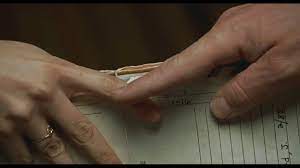
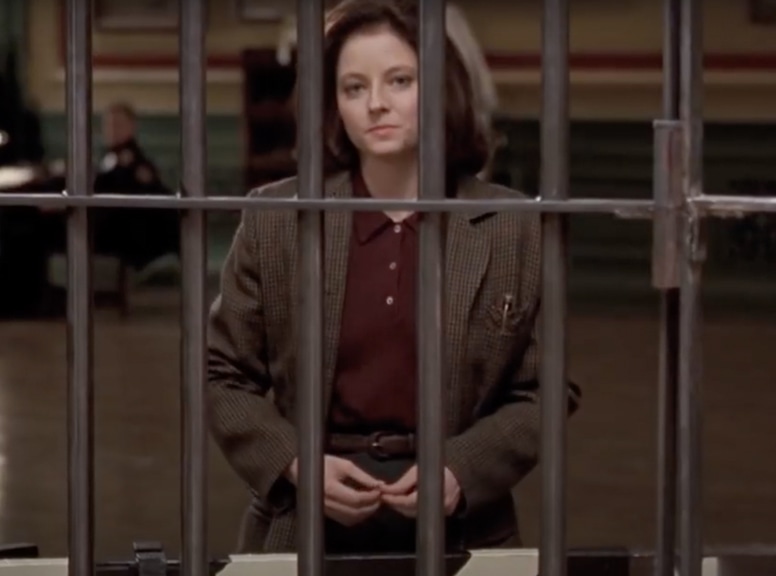
When analysing Silence Of The Lambs many different editing techniques are noticed one of which being Parallel editing. Parallel editing is an editing technique where two or more different scenes are intercut in order to suggest simultaneity.An example of this is showed in this Master the Hollywood Technique of Parallel Editingscreenshot. At the end of the movie we also witness a parallel editing example as it is cutting between two scenes


the time stamp in which i’m analysising however is

  • 1.02:09 – 1.10:43- in this shot we witness Clarisse’s last interview with Lecter.

When we look at this silence of the lambs sequence we establish the relationship between Lecter and Clarice. Clarisse is clever in the fact that she is disobedient and emphasises the power of women in this film. The dynamic between Hannibal and Clarrise is peculiar in the fact that we notice the fact he is willing to help Clarrise with finding Buffalo bill. This extract is significant because we see lots of different shot dynamics such as the establishing shot, long shots and close up shots of Lecter, we also see editing techniques such as an eyeline match (between lecter and the file) and the 180 degree rule used when they are talking.  When we see lecter we also notice the difference in power dynamic between the two of them in the fact that he is always shown to be ‘above’ Clarisse and she is at a lower angle to him. We also notice certain techniques such as pedding with the camera. Towards the beginning of this sequence we witness Hannibal talking to Clarisse differently than he spoke to her in Baltimore and it peds when she starts moving therefore adding more suspense. The camera also focuses very much on Hannibal’s gestures and actions, we feel scared for Clarisse as he creates a chilling presence, this is done by Hannibal always looking into the camera at an extreme close up angle aka using the editing technique of an eyeline match. It is especially tense when we have the ECU on the file for Bufalo Bill’s case.  During this scene it is a POV we hardly ever leave a Close up angle, which makes it extremely chilling. 


character - Did Dr. Hannibal Lecter like Clarice or was he attracted to her? - Movies & TV Stack Exchange
Photos from Juicy Secrets About The Silence of the Lambs

The Psychology of Hannibal Lecter - YouTube

Performative documentary modes

Definition

Performative documentaries focus on the filmmaker’s involvement with their subject, using his or her personal experience or relationship with the subject as a jumping-off point for exploring larger, subjective truths about politics, history, or groups of people. A cinematographer is often asked to capture the documentary production process, as well as intimate footage that illustrates the direct and often personal relationship between filmmaker and subject. Supersize Me (2004) by filmmaker Morgan Spurlock documents his experience eating only McDonald’s fast food for 30 days, chronicling the body issues, health problems, and the ensuing doctor’s visits in an attempt to question the food sold at the famous fast-food chain.

Reference

Masterclass (2021). Film Documentary Guide: 6 Types of Documentaries. [online] Masterclass. Available at: Film Documentary Guide: 6 Types of Documentaries [Accessed 10 Jan. 2024].

https://www.youtube.com/watch?v=tyOQTzl2DcU&t=2692s

SOUND&EDITING
When listening to this sequence we hear some examples of both non-diegetic and diegetic sound. This is evident by the use of upbeat music and also the beeping when they are inside the Mcdonalds. There are less examples of sound as it is a documentative style of filming however there are some examples in which we notice.

-When a joke is told the sound cuts out

-When they are going around Mcdonalds they add music & he also voices over to add impact with a rhetorical question.

-He has a slightly comical analysis of the money aswell.

-He adds dimenuendos after this also.

-Between asking for the food and nutrition thing the tempo of the music is also high, it’s strange as it sets Spirlog as a bit of a trickster, sometimes they also cut the music to punctuate the quality.

-There is also a cut in music when he asks about menu’s to add affect.

-In this documentary the fact that it starts with the kids demonstrates the significance that fast-food restaurants have on kids, it helps emphasise the problem!

-There are loads of cuts from people to the fast food restaurants, 3 shots,3 different Mcdonalds- it is an establishing montage.

-There is a sign that pans to Hungry Valley to represent how food based America is,shows him travelling also.

GRAPHICS

-There are different cartoon animations throughout this clip, it is significant as it shows what corperate guys do and it is trying to be persuasive- this is known as a characerture which is known as a form of political satire.

-The whole thing is clearly there to saferise and mock these chains.

-The use of the clown looking unfriendly is also another demonstration of political satire to structure the documentary.

Return Of The Jedi Diagetic Sound Analysis

Below is my diegetic sound analysis of the final confrontation in ‘Return of The Jedi(1983)Marquand’

-This is important as it helps us understand the different Foley sound features and introduces us to the space genre.

Context – What’s Happening?

This is the final confrontation between the hero (Luke) and the villains (Darth Vader & The Emperor). The two villains are intent on winning a victory for the evil ‘Dark Side’ by showing Luke that to triumph he has to use his rage & hate. 

Overall Tone / Mood

The overall tone and mood is sinister and powerful, there is lot of anger and frustration & corruption

-Threat

-Jeopardy 

-Challenge 

-Epiphany 

-Hope 

Star Wars & Genre & Narrative

It is the combination across 3 films and is the biggest challenge for Luke as he is trying to avoid temptation of turning to the dark

SPACE OPERA- a sub-genre of sci-fi which focuses on melodrama and battles etc. 

There is a simplistic fairy-tale narrative here

Topics / Focus Key examples from the text What meaning (impact) is made? Significance for Genre or Narrative
Diagetic Dialogue / Vocal

  • Vocabulary
  • Delivery
  • Accent
  • Tone
“You underestimate the power of the dark side.”

“I will not fight you.”

“I will never turn to the dark side”

“I feel the good in you father”

“Let the hate flow through you.”

Palpetines voice 

It creates suspense, emphasizes the dark sides evil

Shows Luke’s morality

Shows that the dark side are unsuccessful

There is a politeness from Luke emphasizing his morality 

Demonstrates the manipulation of the emperor 

It is like a snake in the grass- his delivery is monstrous 

It is simplistic, it has the morality of a fairy tale 
Ambient Sound

  • Foley Sound Effects
  • Quality of the sound (editing)
-Vader’s breathing 


-The light-sabers touching back and forth (with scraping together) Luke’s grunts with his light-saber when he snaps NOOO Zzz with the light-sabers (electronic hiss) 

Darth Vader’s footsteps


Helps create a presence when he is near or there. It creates suspense. When he is not fighting it’s metallic  


The light-sabers make the fight seem more powerful, it demonstrates Luke and Vader’s anger. They are static. – It emphasizes the fact Luke is in danger

Shows his frustration towards his father, makes the audience see the darker side toward Luke, he is tempted.

Vader’s footsteps demonstrate the approaching threat 


The light-sabers demonstrate a sense of chivalry which is part of the genre of space opera. 

Expositionary Documentary And News Report Analysis

“Expository documentaries set up a specific point of view or argument about a subject and often feature “voice of God” style voice-over. For expository documentaries, the cinematographer is responsible for collecting footage that supports and strengthens the spoken argument or explanation in the film, including stock footage, archival footage, b-roll, or re-enactments of historical events.” –

Masterclass (2021). Film Documentary Guide: 6 Types of Documentaries. [online] Masterclass. Available at: Film Documentary Guide: 6 Types of Documentaries [Accessed 30 Oct. 2023].

Class Case Study:

How smugglers lure in buyers for illegal routes from Pakistan to Europe – BBC Newsnight.

www.youtube.com. (n.d.). How smugglers lure in buyers for illegal routes from Pakistan to Europe – BBC Newsnight. [online] Available at: https://www.youtube.com/watch?v=N_KqKYTsbgc [Accessed 9 Nov. 2023].

  • The documentary cuts between an omniscient voice over which adds engages the audience further in the story through the tone and mood and it also reflects on what the audience can see, further explaining and retelling the issues that Saeed faced on his journey.
  • There are interviews conducted with Saeed, allowing him to convey his experiences to the audience personally. The interviews also allow for the documentary to gather more in depth information in order to better understand the severity of the situation. The way in which the interview is set up makes it feel more personal.
  • Re-enactments are shown when Saeed is discussing how him and others were held hostage by the Libyan mafia. The re-enactments help to bring the scene closer to reality.
  • Grainy footage is shown of Saeed and others on the boat. This draws intrigue as the audience can see the conditions of their travel on an overcrowded boat full of people searching for a better life.
  • It makes use of aerial shots. This acts as an establishing shot and creates scale.


  • Conventional features of an Expositionary Documentary
  • Voice-over, addresses the audience directly
  • The voice-over may either be a ‘voice of God’ commentator (heard but not seen); or ‘voice of authority’ (seen and heard – usually an expert in the relevant field)
  • Images are used to illustrate (or sometimes counterpoint) the voice over.
  • Editing is used for continuity, to link together images that support the argument put forward in the voice over.
  • A variety of footage, interviews, stills, archive material is assembled to support the argument or elucidate the voice over.
  • Attempts to persuade the audience of a particular point of view, often by appealing to logic and the idea of a common-sense response

www.youtube.com. (n.d.). BBC 100 women: List of inspiring and influential women revealed – BBC News. [online] Available at: https://www.youtube.com/watch?v=peK_KX5XvHU [Accessed 23 Nov. 2023].

What expositional features does this news report have?

  • It uses distant effects by including interviews from various women
  • It uses extreme long shots dependent on the shot of the environment
  • It includes voice overs
  • The camera often zooms out to emphasize the change of environments in the report
  • It also includes events in the present therefore making the audience feel as if they are there
  • It is dramatic and emphasizes what is going on in society today

THIS IS ENGLAND CONTEXT POSTER

SKINHEADS attached to this link is the PDF of my This Is England poster

Our teacher tasked us to create a poster on a main contextual theme from  “This is England”. I chose to research and display my findings of the Skinhead culture. The culture plays a very important role in the film as the group of main characters are either all in a skinhead group or are associated with one.

By researching the context behind a film we are able to understand the references and creative actions the directors used to establish an interesting plot and deep characters. The research I did on the skinhead culture allows me to further understand how influential and intimidating the gangs were.

British Social Realism and This is England

British social realism is a style of cinema that presents the lives of normal people living in Britain. It is used to create a sense of verisimilitude, as a way of diverting away from the unrealistic and unattainable Hollywood blockbuster. It is also often set in a certain period/place.British Social Realism was highly prominent during the 1950’s and 1960’s and is still popular to this day.

British Social Realism is politically angry, this is demonstrated  in This is England as it is directed towards Thatcher and uses Far Right Politics. In This is England Shaun is in search for a father figure in which he meets Woody and Combo.

British social realism also uses similar strategies to documentary film making and it has been influenced by the French New Wave (Italian Near Realism.) – This is evident when we see Shaun chucking the flag into the water, reference to 400 blows.

Combo is manipulative and is the stereotype towards your extremely angry man in this film genre

Hard truths are also demonstrated within this genre. This is emphasized by the treatment of Milky and the Asian and Jamaican immigrants

– Ska music is also played a lot.

EXAMPLES 

This screenshot demonstrates the fact that This Is England

fits the genre as it shows them all demonstrating the stereotypes of the Working class genre.

Screenshot of Church in This Is England


This screenshot is a prime example of the anger towards Politics. Margret Thatcher is talked about a lot in the film and the act of graffiti on the church just demonstrates further aggression. This links This Is England towards the genre as it links back to the concept of the genre being very politically centered.

Screenshot From This Is England Of Combo

This screenshot demonstrates Rage and Anger, it also signifies the marginalization of people from Pakistan, linking it back to the British Social Realism Genre.

Extreme Long Shot Of Combo

This screenshot represents the fact that the area in which This Is England is filmed in an impoverished area  – This is emphasized by the setting behind Combo.

Archive footage of Charles and Diana

Demonstrates the style of documentary style filming as it is archive footage of the two of them.

Extreme Close Up with National Front sign in background

This demonstrates examples of the racist attitude towards people during this time period, linking it closer toward the genre.

Shot of Shaun in the shop taking cigarettes

This helps demonstrate the significance of the Iconography in the film

Close Up shot of Shaun

This shot is at the end of the film and it is where he chucks the English Flag in the water.  This is significant as it is influenced by the French New Wave (Italian Near Realism.)